Premium Link-Building Services
Explore premium link-building options to boost your online visibility.
Explore premium link-building options to boost your online visibility.
In many parts of the world, particularly in rural and agricultural landscapes, large predators—be they wolves, eagles, or wildcats—are viewed through the lens of conflict. Historically, these animals have represented a direct economic threat to livestock and a perceived danger to human safety. This ingrained fear and hostility drive widespread persecution, poisoning, and illegal hunting, often leading to significant setbacks for conservation efforts.
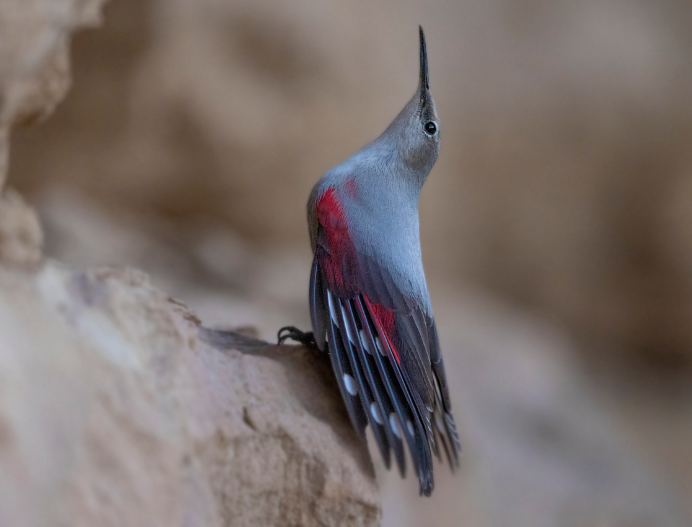
However, a fundamental shift is occurring. Ethical ecotourism, when executed with a robust educational mandate and deep community integration, is proving to be a powerful agent of change. By providing tangible, alternative economic value to living predators, responsible Ecotours are transforming local attitudes from hostility to stewardship. This transformation—from seeing a raptor as a "pest" to recognizing it as a "valuable asset"—is the core mechanism by which ethical operators support conservation NGOs and secure the long-term survival of threatened species.
This article, aimed at Environmental News, BirdLife Partners, and Conservation NGOs, details the ethical framework that underpins this educational revolution and highlights the critical distinction between responsible operators and destructive "cowboy" operators whose actions often exacerbate human-wildlife conflict.
For many protected species, such as the Eastern Imperial Eagle (Aquila heliaca) or the Great Bustard (Otis tarda) (whose chicks are vulnerable to mammalian predators), the greatest non-habitat threat is illegal persecution. In regions reliant on livestock farming, raptors are targeted due to perceived threats to poultry or lambs, and mammalian predators are culled due to conflicts with livestock. This conflict is rooted in a fundamental lack of economic incentive for coexistence.
Conservation efforts by NGOs like BirdLife Partners often focus on direct mitigation—nest protection, anti-poisoning campaigns, and power line insulation. Crucially, ethical ecotourism addresses the root cause: the perception of predators as liabilities.
Ethical operators integrate education into every facet of the tour, targeting local communities as the primary beneficiaries of this knowledge transfer. The mandate is two-fold:
Economic Education: Demonstrating, through transparent financial models, that a live, protected predator is worth far more to the community's long-term financial health than a dead one.
Ecological Education: Replacing fear and myth with scientific fact, teaching the critical ecological role predators play in maintaining a healthy, balanced ecosystem (e.g., controlling rodent populations, which benefits agriculture).
The most effective way to change a negative attitude is to attach a positive financial consequence to the animal’s presence. Ethical Ecotours achieve this through transparent financial mechanisms:
Responsible operators ensure that their entire supply chain benefits local families and businesses that commit to coexistence:
Accommodation: Prioritizing homestays or small, local guesthouses located on farms or in villages near raptor territories. These families receive direct revenue, creating a "Raptor Dividend"—income directly traceable to the presence of the protected bird.
Employment: Hiring and rigorously training local community members as guides, drivers, and trackers. These individuals become both financially invested in the predator's survival and empowered spokespeople for conservation within their community.
Local Services: Paying premium prices for local, traditionally-raised food and crafts, further increasing the value of local resources and minimizing economic leakage.
When a farmer earns more from housing a few raptor-viewing tourists than they potentially lose to predation, their attitude shifts from retaliation to protection.
A portion of the ethical tour fee is often ring-fenced to support local conflict mitigation efforts, often managed in partnership with NGOs:
Compensation and Insurance: Funds may contribute to local livestock insurance or compensation schemes for verified predator losses, reducing the financial burden on farmers.
Non-Lethal Deterrents: Supporting the local purchase and deployment of non-lethal predator deterrents, such as electric fencing, specialized guarding dogs (e.g., the Hungarian Komondor), or innovative lighting systems.
This proactive approach contrasts sharply with the purely extractive model of unethical operators.
https://ecotourswildlife.co.uk/birding-holidays/europe/hungary/
The ethical framework is defined by the operator’s commitment to reinforcing, rather than undermining, local coexistence efforts.
The ethical operator adheres to a strict code of conduct focused on long-term relationship building and ecological integrity:
Protocol StandardImplementationConservation OutcomeCommunity ConsentOperators only visit areas where they have secured the explicit, informed consent and cooperation of the local landowner/community leader.Ensures that tourism is seen as a welcome partnership, not an external imposition.Education and InterpretationGuides provide deep, science-based education to tourists, emphasizing the ecological role of the predator and the local conservation efforts (e.g., MME's Saker nest boxes).Tourists return home as informed advocates, and local guides reinforce their community's conservation pride.Transparency and AccountabilityOperators share transparent data on the financial contributions made to the community and local conservation projects.Builds trust with local communities and NGOs, proving that profits are linked to protection.Zero Tolerance for DisturbanceStrict adherence to distance and noise protocols to ensure the predator remains undisturbed, reinforcing the animal's natural behaviour.Prevents habituation, which would increase the animal's vulnerability and justify local claims of "nuisance."
The "cowboy" operator, focused on quick profit and guaranteed sightings, fundamentally undermines the delicate work of changing local attitudes, often leaving a trail of antagonism and resentment:
Trespassing and Disrespect: Entering private farmlands or protected zones without permission, driving off-road, and ignoring local traditions. This confirms the community’s worst fears: that outsiders exploit their resources without respect.
Baiting and Luring: Using baiting or calling to guarantee a sighting (e.g., for owls or eagles), which can habituate the predator to humans. This loss of natural fear increases the chance of human-wildlife conflict and subsequent retaliatory killing.
Information Leakage: Publicly disclosing sensitive nesting or roosting locations online for promotional purposes, attracting waves of unregulated visitors and heightening the risk of poaching and stress-related nest failure.
Financial Leakage: Booking foreign-owned services and failing to invest revenue into the local community or compensation schemes. The locals see the birds bringing in cash for outsiders, but none for themselves, reinforcing the perception that the animal is a liability and the tourists are exploiters.
The destructive actions of a single 'cowboy' operation can undo years of relationship-building and conservation progress achieved by NGOs and ethical partners.
In Central Europe, the efforts by MME/BirdLife Hungary to protect Saker Falcons and Eastern Imperial Eagles illustrate this mechanism perfectly.
MME’s Foundation: The NGOs work diligently to install artificial nest boxes on power poles and in trees, providing secure, monitored breeding sites.
Ecotours Integration: Ethical operators bring small groups to the area, utilizing local drivers and guides (often former farmers) and staying in local guesthouses.
The Result: The locals witness the direct, traceable income stream from the bird’s presence. The guide, a trusted community member, reinforces the ecological value of the eagle, explaining its role as a key indicator of a healthy, productive agricultural landscape. This economic and educational reinforcement transforms the eagle from a potential threat into a symbol of prosperity and local pride.
This model is replicable worldwide for a variety of predators, from snow leopards in the Himalayas to jaguars in the Amazon. The principle remains constant: make the animal worth more alive to the local community than it is dead.
For NGOs and policymakers, the goal must be to champion the ethical operators and isolate the "cowboys."
Conservation NGOs should establish and aggressively promote a rigorous certification standard for ecotourism partners, specifically auditing:
Local Financial Contribution: Verifiable proof of local spending and fair wages.
Non-Interference Protocols: Strict rules against baiting, calling, and nest intrusion.
Educational Outreach: Mandatory guide training focused on human-wildlife conflict mitigation and local ecological interpretation.
Environmental News outlets must educate the traveling public on the necessity of vetting tour operators based on their ethical protocols. Tourists must understand that choosing a cheap, guaranteed sighting tour is often choosing to fund practices that harm the animals and undermine local coexistence efforts.
NGOs should focus on empowering local communities to become the arbiters of ethical tourism, giving them the tools and legal support to report and ban unscrupulous operators from their land.
The challenge of predator conservation is fundamentally a human challenge—a conflict between economic necessity and ecological value. Ethical ecotourism offers a powerful, sustainable solution by shifting the financial equation.
By embedding themselves deeply within local communities, operating with rigorous transparency, and utilizing education to demonstrate the economic and ecological value of live predators, responsible Ecotours are actively changing deep-seated, negative attitudes. They transform hostile stakeholders into empowered stewards.
We urge the global conservation community to recognize ethical ecotourism not just as a source of revenue, but as a crucial, non-lethal tool for conflict resolution. By championing this ethical framework, we ensure that the survival of majestic predators like the Saker Falcon and the Imperial Eagle is inextricably linked to the prosperity and pride of the local communities who share their land. The choice is clear: support the ethical stewards who teach coexistence, or inadvertently fund the antagonists who perpetuate conflict.
Explore premium link-building options to boost your online visibility.